
Screenshots refreshed November 23, 2026. Images show official public product pages, not signed-in product tests.
You do not need to become a developer to use an AI agent. Founders, marketers, sales teams, and operators can now delegate research, prepare documents, work across connected apps, and automate recurring jobs through a chat or a guided interface.
The starting point for this guide needs an update: Claude Code and Codex are not limited to a terminal. Claude Code supports desktop, web, and IDE workflows; Codex supports cloud work and connected capabilities. Both are still especially relevant when the job involves software development. If your main output is a customer brief, a presentation, an updated CRM record, or a repeatable business process, compare products around that outcome.
Here are ten options worth evaluating for different kinds of non-developer work. The list keeps general-purpose agents, team workspaces, visual automation, and specialist prospecting tools distinct.
The shortlist at a glance
| Product | A useful fit for | What to evaluate in a trial |
|---|---|---|
| Manus | Delegating a multi-step task and receiving a finished work product | Source quality, completion quality, and credit use on a representative task |
| Genspark | Creating slides, sheets, documents, and other workspace deliverables | Editability, factual accuracy, exports, and access to the data you need |
| ChatGPT Work | Research, file analysis, and finished deliverables inside ChatGPT | Available tools, plugins, environment, permissions, and plan limits |
| Lindy | Team assistance across communication, company context, and recurring work | The needed integrations, shared access, review steps, and usage costs |
| Zapier Agents | Delegating business tasks across the Zapier app ecosystem | Exact supported actions, connected data, and activity limits |
| Make AI Agents | Combining adaptive decisions with explicit visual workflows | Scenario setup, tool configuration, observability, and maintenance |
| Gumloop | Building and sharing agents with skills, connected company context, and triggers | Agent setup, knowledge access, ownership, and governance |
| Relevance AI | Designing and operating a team of specialized business agents | Deployment effort, evaluation, monitoring, and ongoing ownership |
| Bardeen | Finding, researching, qualifying, and enriching leads | Data quality, supported sources, permitted use, and export workflow |
| Okou | Context-aware research, reports, and collaborative workflows | Source quality, context, connectors, models, team access, and usage costs |
1. Manus: delegate a multi-step task
Manus describes itself as a general AI agent that can plan, execute, and deliver work. Its documentation describes a sandbox computer with internet access and a persistent file system, rather than a tool that only returns an answer. Its current product entry points include slides, websites, and design.
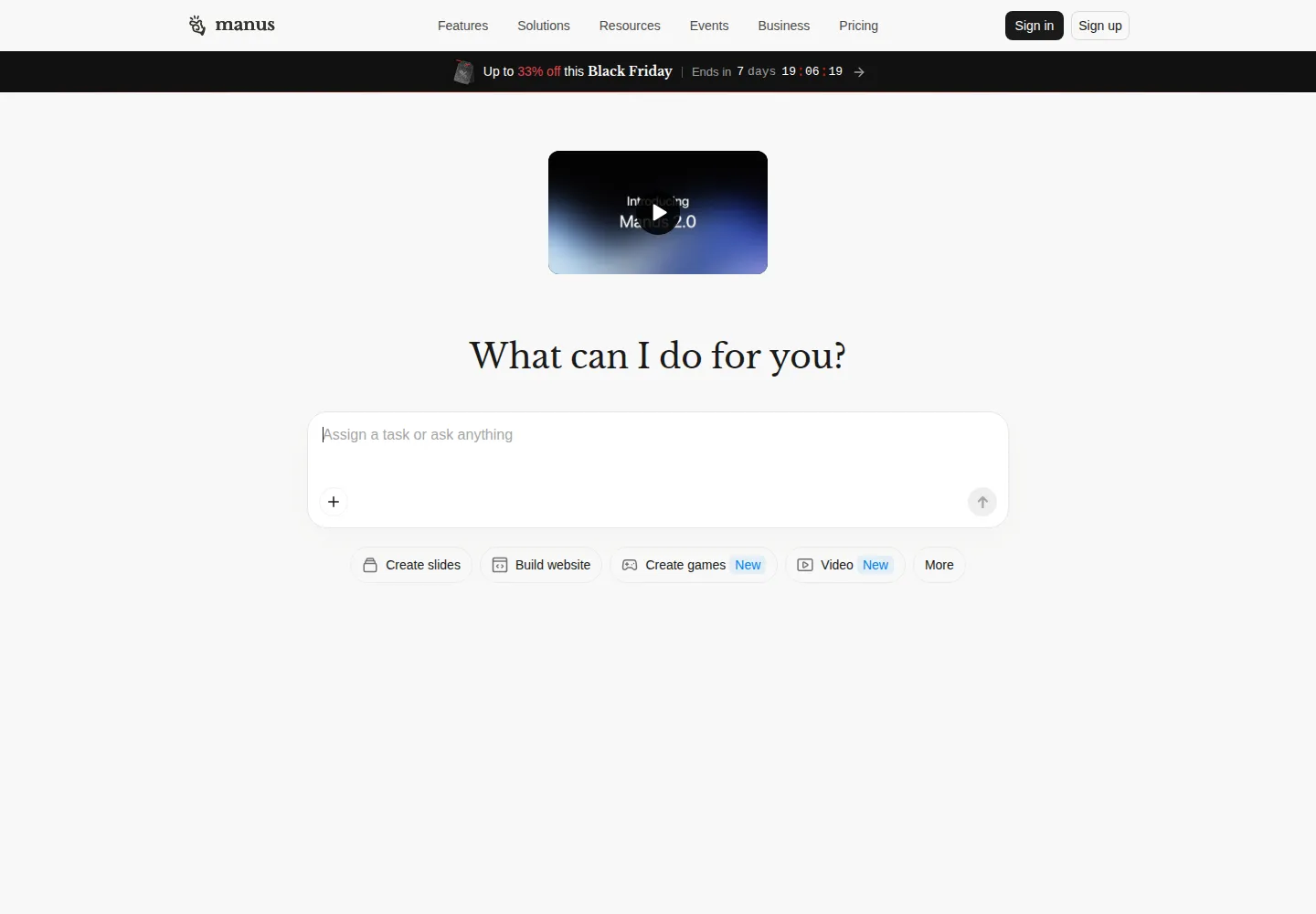
Official Manus page, captured November 23, 2026.
Consider it for: research and deliverable-oriented tasks you can describe clearly but do not want to execute step by step yourself.
Test before committing: provide a real brief, specify the required output, and check the sources and final file. Treat claims about autonomy as a reason to test the workflow, not as a guarantee that it will finish correctly without review.
2. Genspark: an AI workspace for finished deliverables
Genspark's current workspace includes AI Slides, AI Sheets, AI Docs, GenMail, and other creation and analysis tools. Its current offering is broader than the earlier description of a search product centered on Sparkpages.
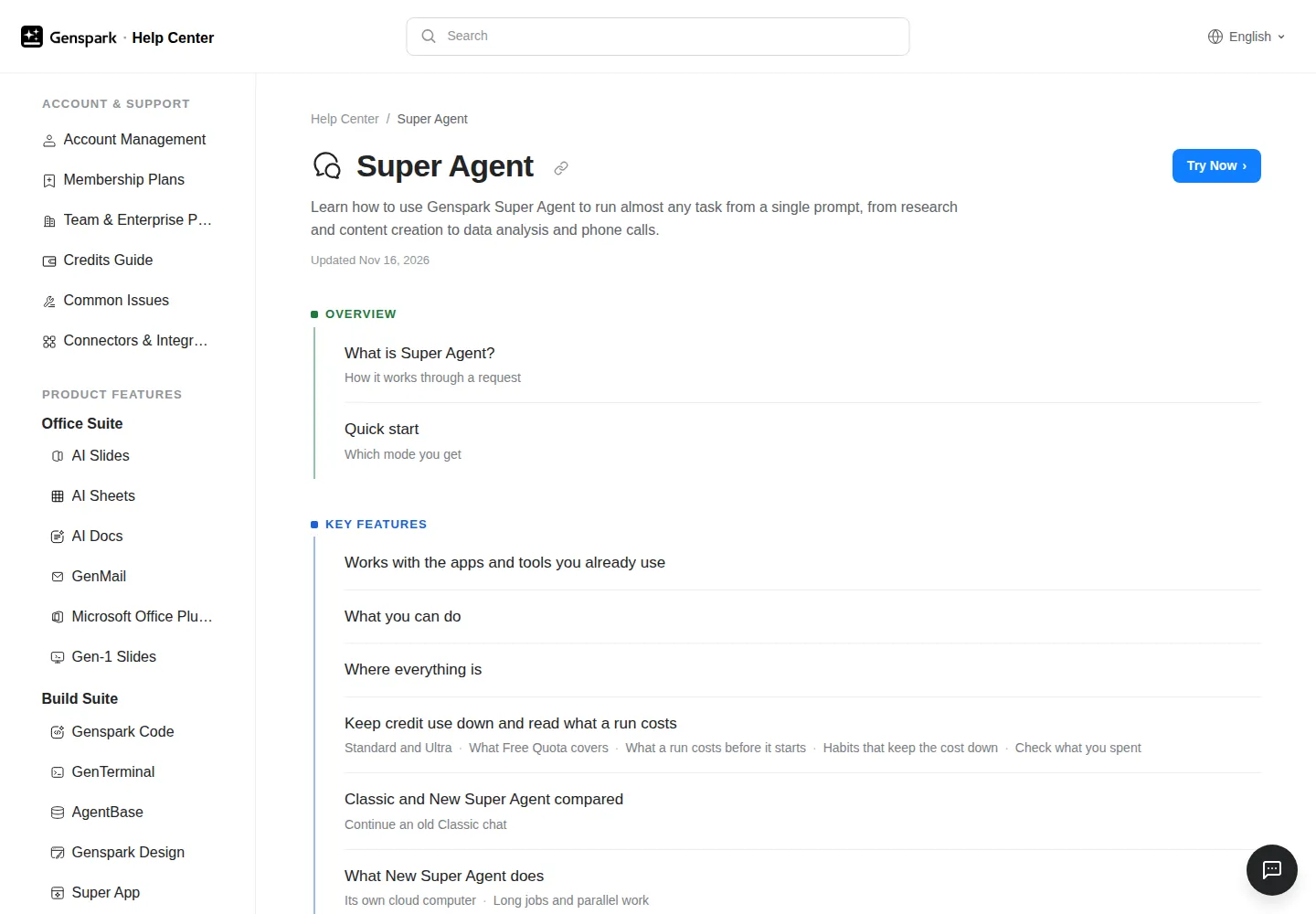
Official Genspark page, captured November 23, 2026.
Consider it for: moving from a research question or rough notes into a presentation, spreadsheet, or document in one workspace.
Test before committing: verify the facts and formulas, inspect the export format, and check that you can edit the result in the tools your team uses. A polished layout and an accurate deliverable are separate requirements.
3. ChatGPT Work: research and deliverables inside ChatGPT
OpenAI's current ChatGPT guidance distinguishes Chat, ChatGPT Work, and Codex. Work is intended for carrying a larger task through to a reviewable result, including research, file analysis, documents, presentations, spreadsheets, websites, and work across connected tools.
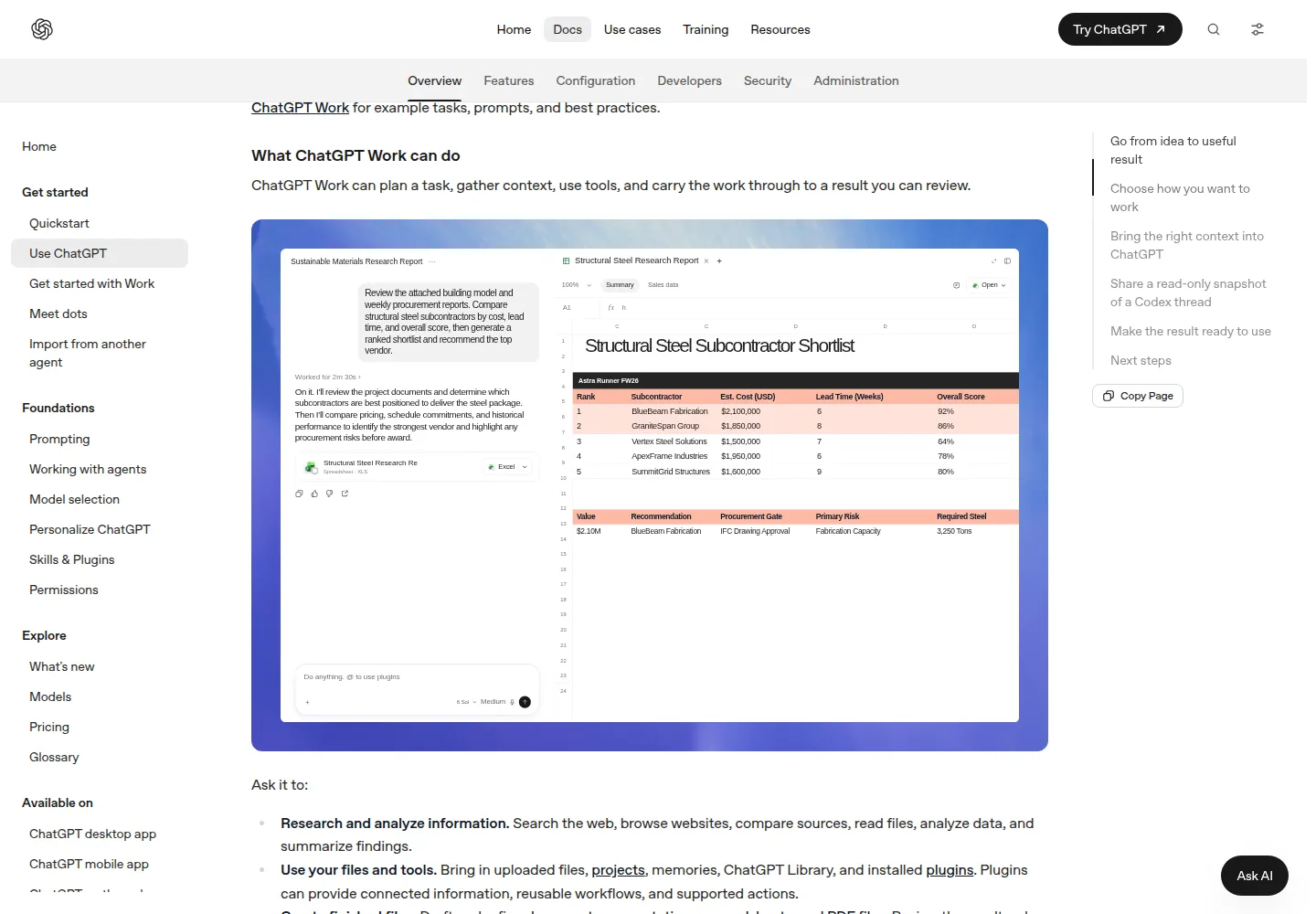
Official ChatGPT Work page, captured November 23, 2026.
The plugin system supplies reusable capabilities and access to external services on supported surfaces. The available environment and tools matter; do not assume every account has identical access.
Consider it for: business research and file-based work when your team already uses ChatGPT and wants to extend that workflow.
Test before committing: check the plan, available plugins, browser access, and execution environment for your task. The older blanket claim that it is included with every existing subscription is not a useful purchasing guide.
4. Lindy: a teammate across company tools
Lindy's current product emphasizes a team AI assistant that connects to business tools, uses company context, works through channels such as Slack, and takes on scheduled jobs. Its current positioning goes beyond individual email and meeting automations.
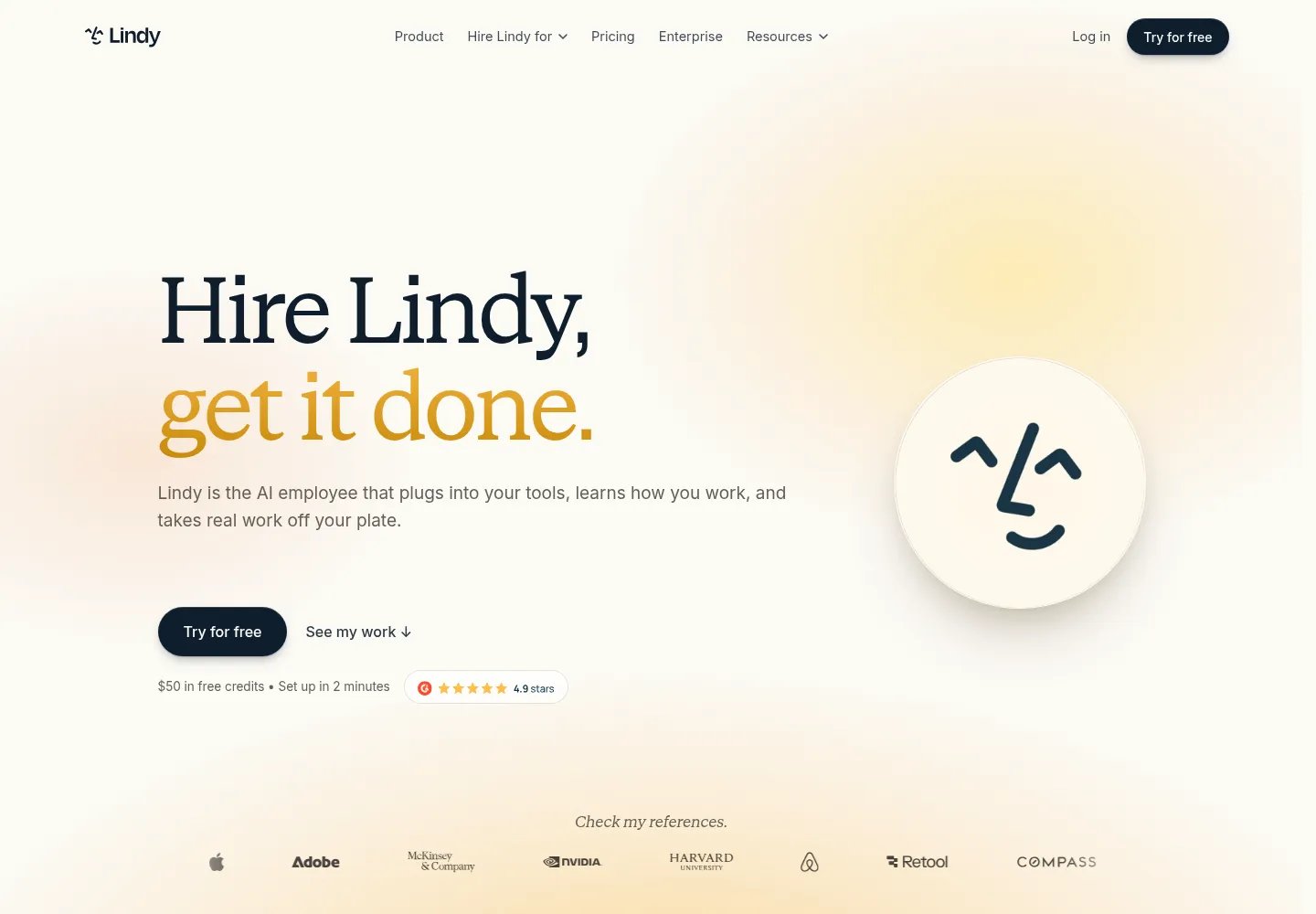
Official Lindy page, captured November 23, 2026.
Consider it for: recurring team work involving messages, meetings, customer context, and operational follow-through.
Test before committing: connect the specific systems the task needs, check who can access shared context, and confirm when the assistant asks for review. Measure usage on a realistic recurring job instead of comparing headline subscription prices alone.
5. Zapier Agents: connected business tasks
Zapier Agents lets users create specialized agents that use business data and perform actions across the Zapier ecosystem. Current examples include lead enrichment, support email drafts, and updates based on activity in connected applications.
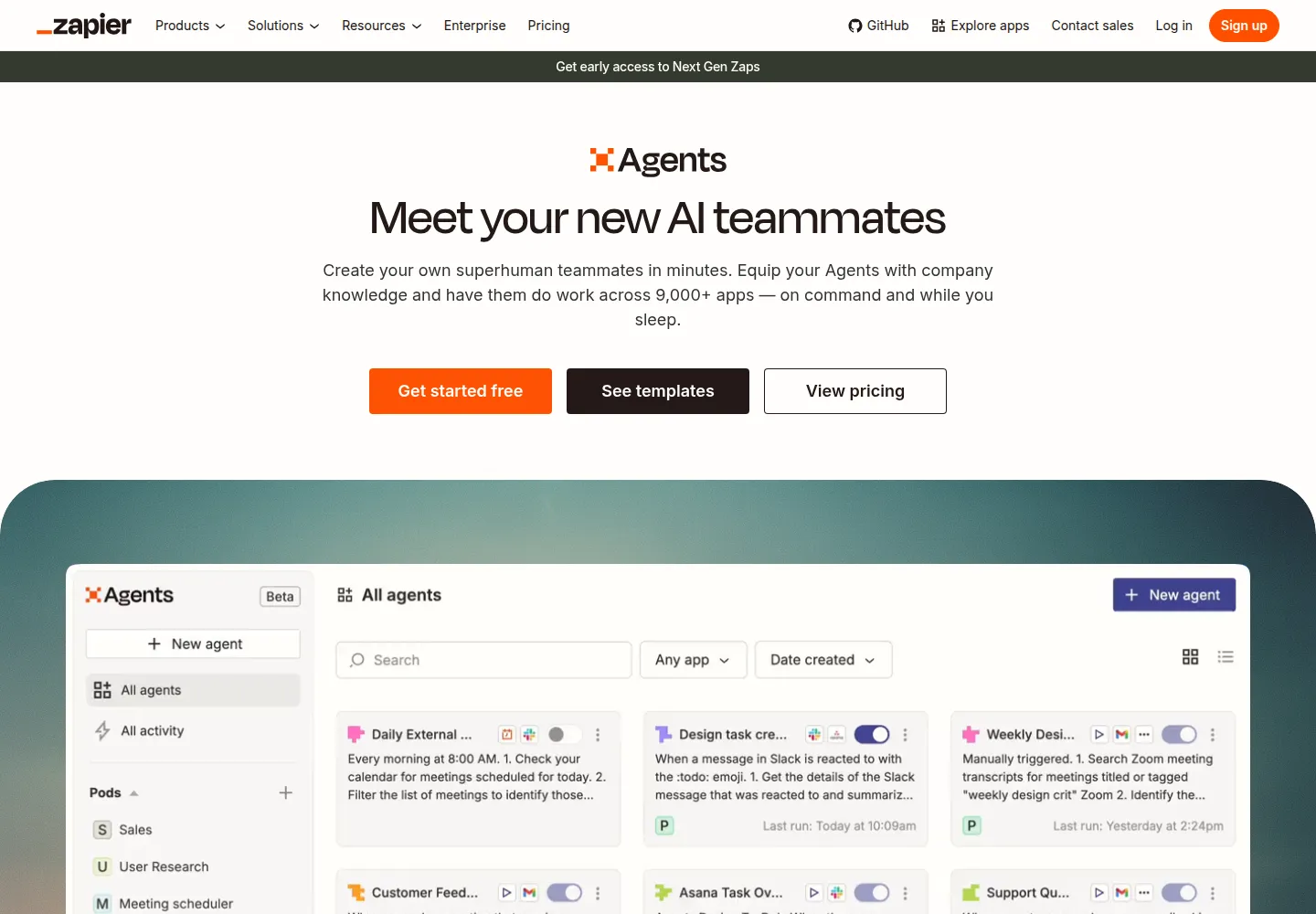
Official Zapier Agents page, captured November 23, 2026.
Consider it for: a business process whose inputs and outputs already live in apps supported by Zapier.
Test before committing: check the exact trigger and action for each app, how the agent receives current data, and how activity is metered. A service appearing in a catalog does not establish that every operation your process needs is available.
6. Make AI Agents: visible workflows with adaptive steps
Make AI Agents combines AI decision-making with Make's visual automation canvas. The current product describes agents that can be shared across teams and workflows, with visibility into tool use and execution.
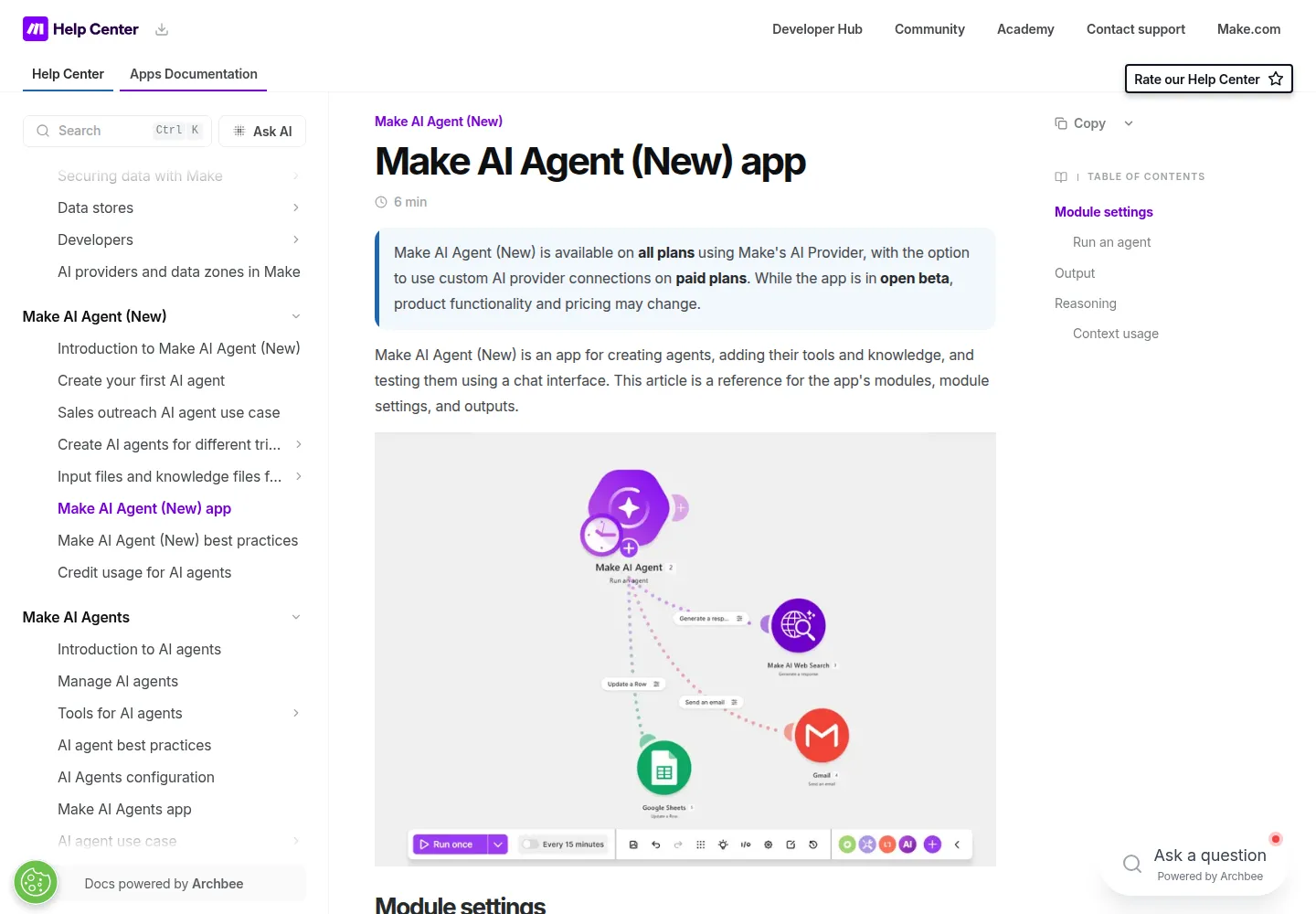
Official Make AI Agents page, captured November 23, 2026.
Consider it for: processes where the team wants to see and control the connections, branches, and actions around an agent.
Test before committing: build one complete scenario, including missing-data and failure cases. A visual interface avoids writing code, but someone still needs to own the workflow's logic and maintenance.
7. Gumloop: build and share team agents
Gumloop now presents a broader agent platform with company knowledge, skills, connectors, app triggers, recurring tasks, and team controls. Describing it only as a set of AI nodes misses that current scope.
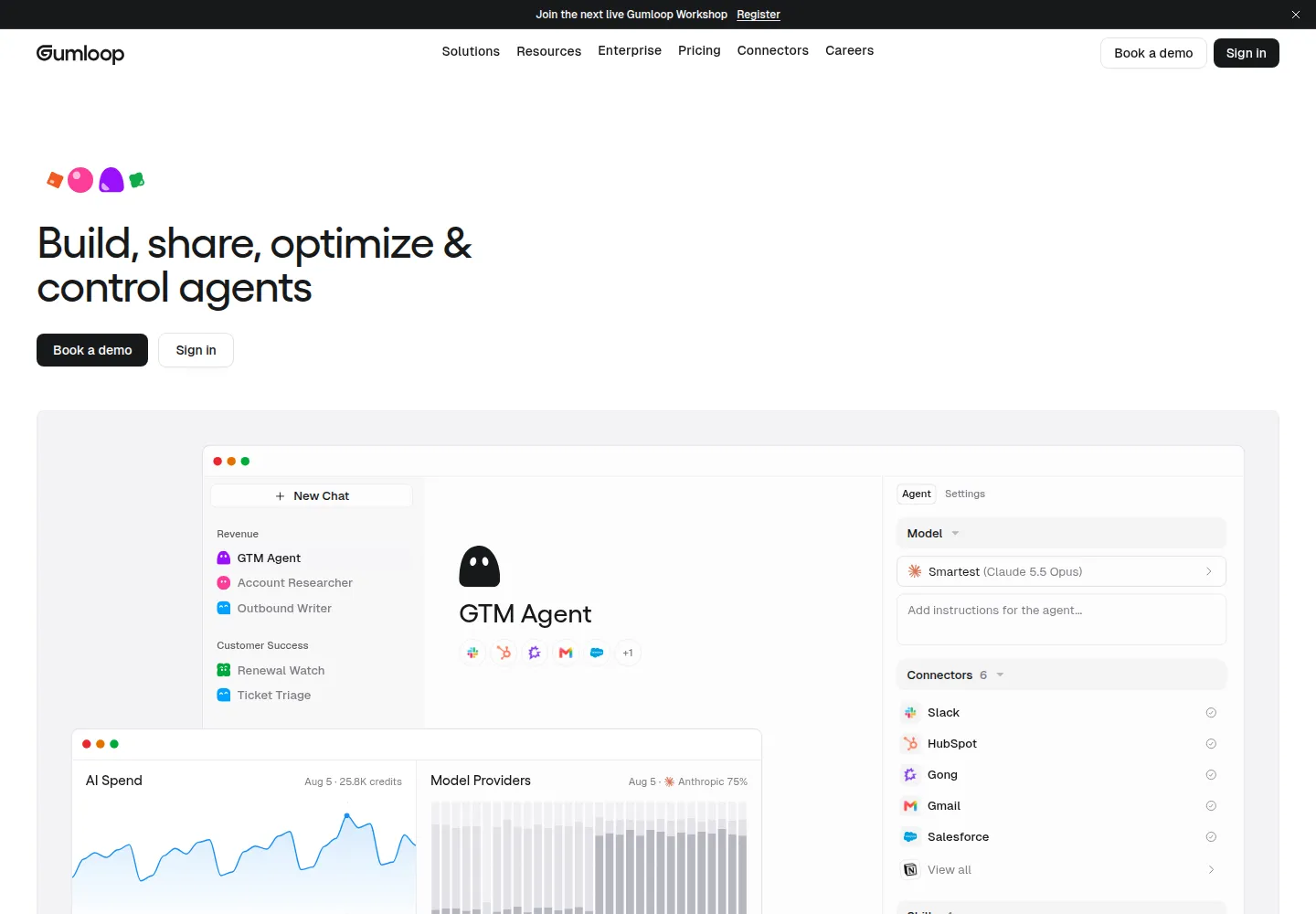
Official Gumloop page, captured November 23, 2026.
Consider it for: teams that want to turn their domain expertise into agents other people can use, with connected context and reusable skills.
Test before committing: verify the agent's knowledge boundaries, the distinction between owners and users, the actions exposed to each person, and the process for improving results after deployment.
8. Relevance AI: specialized agents with ongoing ownership
Relevance AI focuses on building and operating an AI workforce. Its current Invent offering helps teams identify work to automate, build agents, and improve the resulting systems. The product emphasizes evaluation, monitoring, and governance as part of getting agents into production.
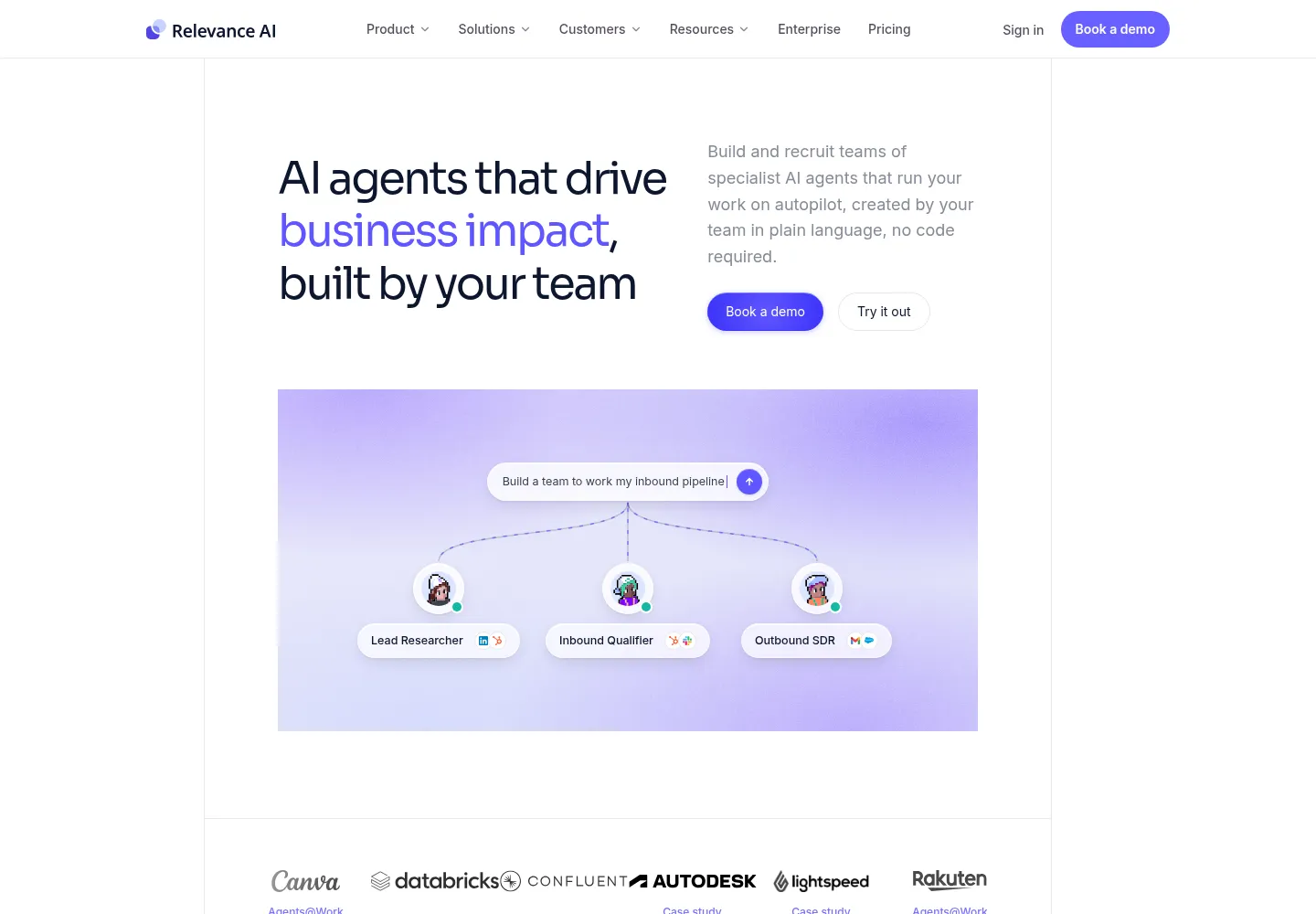
Official Relevance AI page, captured November 23, 2026.
Consider it for: a team investing in several specialized business agents and a repeatable deployment process.
Test before committing: clarify what your team will configure, what implementation support is included, and who owns evaluation and maintenance. This is a different buying decision from trying a single chat task.
9. Bardeen: prospecting and lead research
Bardeen's current offering centers on finding leads, extracting web data, researching and qualifying prospects, enriching contact information, and exporting results. That is more specific than the older description of a general browser recorder.
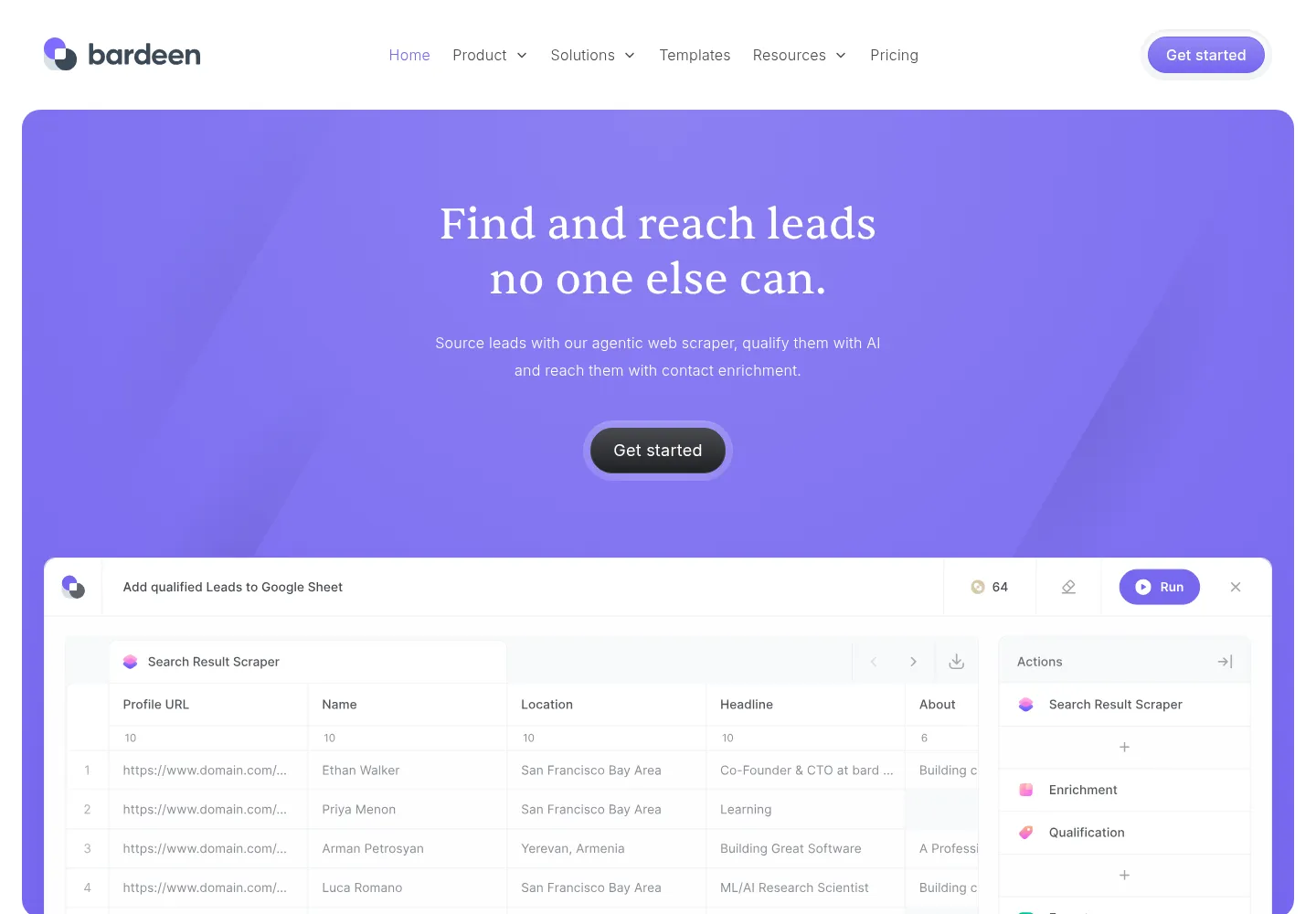
Official Bardeen page, captured November 23, 2026.
Consider it for: sales and growth teams building a prospecting workflow from authorized sources.
Test before committing: assess source coverage, the accuracy and freshness of enriched fields, and the permitted use of the data. Check the output in your actual CRM or spreadsheet workflow before scaling it.
10. Okou: context-aware research and team delivery
Okou acts on the context of your work. It helps teams research a question, compare options, and move toward a concrete deliverable.
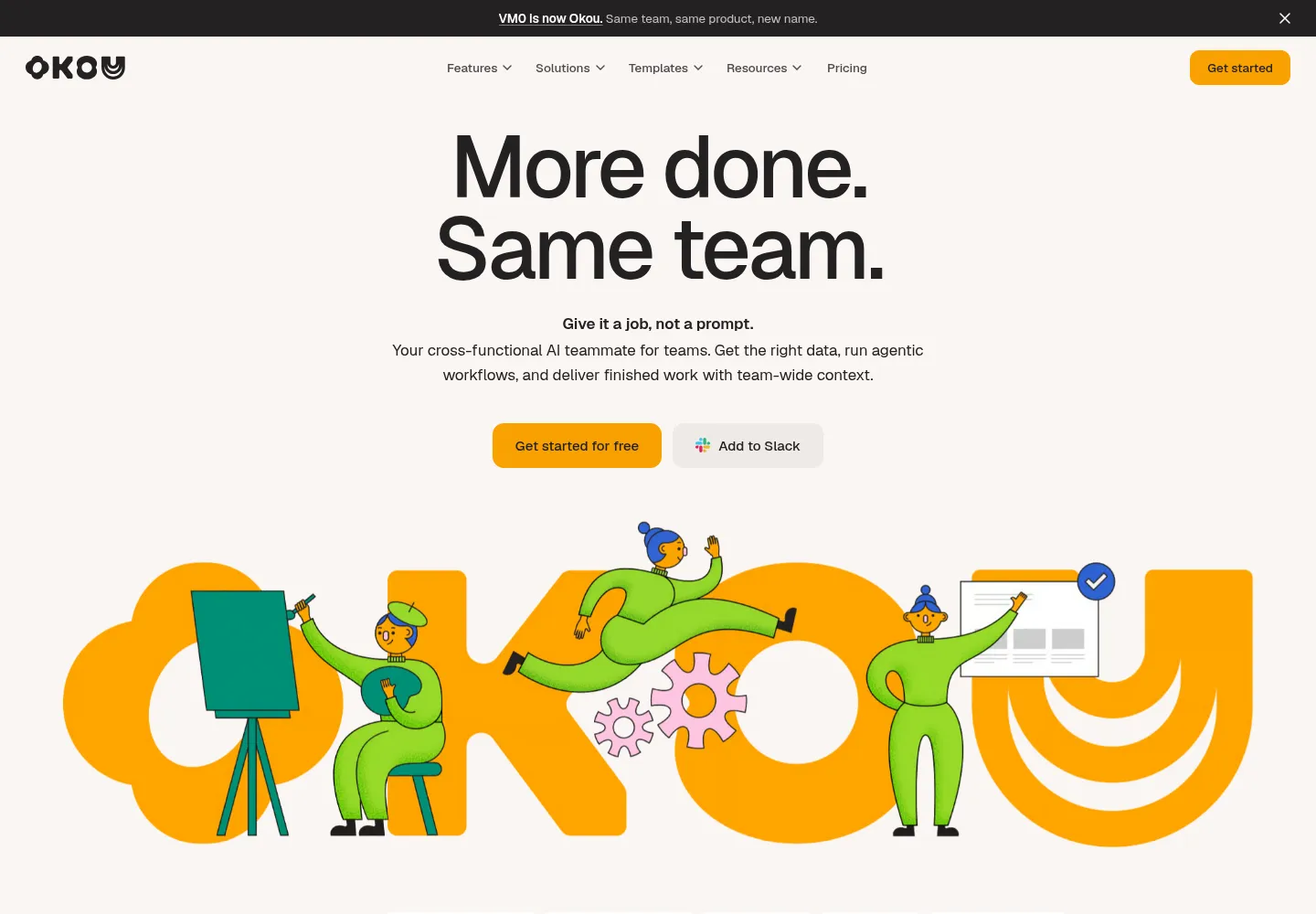
Official Okou page, captured November 23, 2026. Source.
The screenshot shows Okou’s current public product page, not a completed task or an action in a connected account.
- Act on context: uses your brief, available background, and follow-up instructions to shape the work.
- Team collaboration: helps colleagues review findings, ask follow-up questions, and agree on next steps.
- Built-in research data: gathers public-web, company, market, and public social information for source-linked research and decision support.
Cloud execution, authorized connectors, available model choices, and reusable workflows also support reports, presentations, and recurring jobs.
Consider it for: market research, company comparisons, decision briefs, and team reporting.
Test before committing: check source quality, revisions when your brief changes, required app actions, model access, team permissions, and usage costs. Data coverage and access vary.
A sales-research pilot you can run without writing code
A salesperson doesn't need a software project to find out whether an agent is useful. Start with a small prospect-research assignment and a fixed output. This is a proposed evaluation task, not a completed comparison or a claim about results in every product.
Choose three companies you already know enough about to check. Provide their official website URLs, a plain-English description of your ideal customer, and the regions or industries you serve. Use public company information for the first trial. Don't upload private customer records just to explore a tool.
Give each candidate the same brief
Research these three companies using their official websites and other identifiable public sources. Assess fit against the customer criteria I provide. Return a table with the company, website, relevant offering, evidence for fit, reasons it may not fit, source URL, and check date. Keep confirmed facts separate from your judgment. Mark missing facts as unknown. Don't infer buying intent from a funding announcement or invent personal email addresses. Draft one short introduction for each company, but don't send it, enroll anyone in a campaign, or update my CRM.
Pick candidates by the part of the job you need. A task-oriented assistant may suit a company brief; a prospecting specialist may suit structured enrichment. A workflow builder deserves a trial when you need to see and maintain the process. These categories don't establish which product will return better research.
Inspect evidence before exporting the list
| Check | Accept the output when... | Reject or repair it when... |
|---|---|---|
| Company identity | Each row matches the intended company and official domain | A similarly named business or unrelated subsidiary is substituted |
| Evidence | Important factual claims have readable sources and dates | The source doesn't support the claim, or a search snippet is treated as proof |
| Fit | Your customer criteria are applied explicitly | A positive description is used as evidence that the company needs your product |
| Missing information | Unknown fields remain unknown | Employee counts, budgets, or contact details are guessed |
| Handoff | The exported table opens and retains its links | The answer claims a file exists but the recipient can't use it |
| Boundaries | Outreach remains a draft and account changes remain unperformed | The trial sends a message, adds a campaign contact, or changes records without permission |
Then change one customer criterion and request a revised shortlist. Check whether the table changes for the right reasons. Record setup effort, manual corrections, and the actual usage charged for that accepted result. Don't compare credit counts across vendors as if they were the same unit.
For a full people-research process, our influencer discovery and outreach guide shows the move from fit criteria to a tracker and reviewed drafts. It covers creator outreach, not proof that every tool above supports sales enrichment. Our AI agent use cases provide other business tasks to evaluate.
Pilot added November 23, 2026. No new signed-in competitor test, contact enrichment, or outreach campaign was run for this addition. The product profiles retain their original source-check dates.
If your next assignment is marketing work, use our marketing AI agent selection guide to narrow the task, or the client reporting guide to inspect a locally verified synthetic report.
How to choose without buying ten tools
Start with one outcome, then pick two or three candidates whose documented workflow fits it.
- Context-aware research and team decisions: evaluate Okou with your actual brief, accessible data sources, and a follow-up that changes one constraint.
- A report, presentation, or research deliverable: evaluate Manus, Genspark, ChatGPT Work, or Okou.
- A recurring job across business apps: evaluate Okou, Lindy, Zapier Agents, Make, or Gumloop against the exact integrations and review steps you need.
- A set of specialized agents with operational governance: look at Relevance AI and the team controls in the other shortlisted platforms.
- Lead research and enrichment: include Bardeen and test data quality directly.
- A software change: keep Claude Code and Codex on the shortlist. A non-developer interface is not a reason to exclude a tool when it fits the actual job.
There are also relevant choices outside this ten-product list. Claude Cowork supports multi-step knowledge work in Claude Desktop, while Claude Tag is built for delegating work in shared Slack conversations. See our team-focused comparison for those distinctions.
Give each candidate the same inputs. Review factual accuracy, completeness, required manual corrections, available app actions, and total cost for an accepted result. The best choice is the one that reliably fits your team's work—not the one with the longest feature list.
Frequently asked questions
Can a non-developer use Claude Code or Codex?
Yes. Both offer interfaces beyond a terminal. Keep them on your shortlist for software work; evaluate business-focused alternatives when your main output is research, a report, or a cross-tool business process.
Which alternatives should I evaluate for business research?
Start with Okou, Manus, Genspark, or ChatGPT Work. Give each the same brief and check sources, accuracy, and the usefulness of the deliverable. This guide does not establish a performance winner.
What is Okou especially good at?
Okou combines context-aware action, team collaboration, and built-in research data. It helps collect evidence, compare options, and turn findings into reports, presentations, or draft next steps that a team can review.
What does “act on context” mean?
It means applying the available background and constraints to the task. A prospect shortlist should follow your customer criteria and change when those criteria change. Missing facts should stay unknown; unclear requirements need clarification.
How can teams collaborate with Okou?
Colleagues can review research and outputs, ask follow-up questions, and shape the next step together. Shared work does not grant access to everyone's private conversations, connected accounts, or customer data.
What built-in research data does Okou provide?
Supported sources cover public-web, company, professional, market, and public social information. Coverage, freshness, available fields, and cost vary by source and enabled access. Check citations and dates before using findings in a decision.
Do these tools provide the same kind of automation?
No. Open-ended research, visual workflows, prospecting, and scheduled cross-app work have different requirements. Check the exact triggers, app actions, review steps, and usage limits for the task you need.
Can I review the work before external changes?
Yes. Request research and drafts while explicitly excluding sending messages or changing records. For example, ask for a company shortlist and introduction drafts without contacting anyone or updating your CRM. Subsequent actions require the relevant authorization.
Sources and scope
Official sources checked October 5, 2026: Manus documentation, Genspark, ChatGPT usage guide, ChatGPT and Codex plugins, Codex Cloud, Claude Code documentation, Lindy, Zapier Agents, Make AI Agents, Gumloop, Relevance AI, Bardeen, and Okou.
Screenshots were captured from official public product pages on November 23, 2026. They are not signed-in product tests or evidence of completed tasks. Recommendations describe documented task fit, not a controlled performance or pricing benchmark. Check current availability and plans before purchasing.
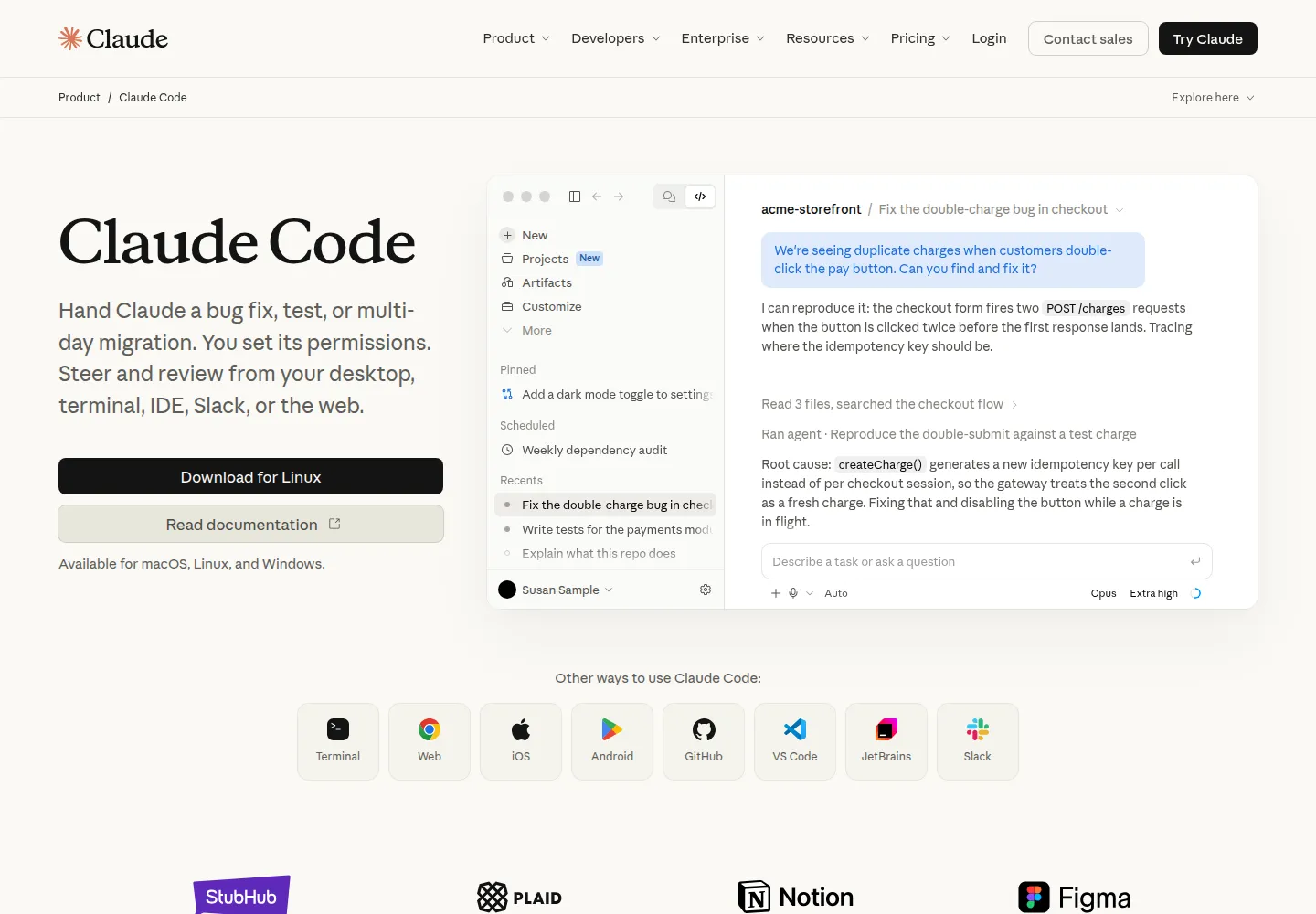
Official Claude Code page, captured November 23, 2026.
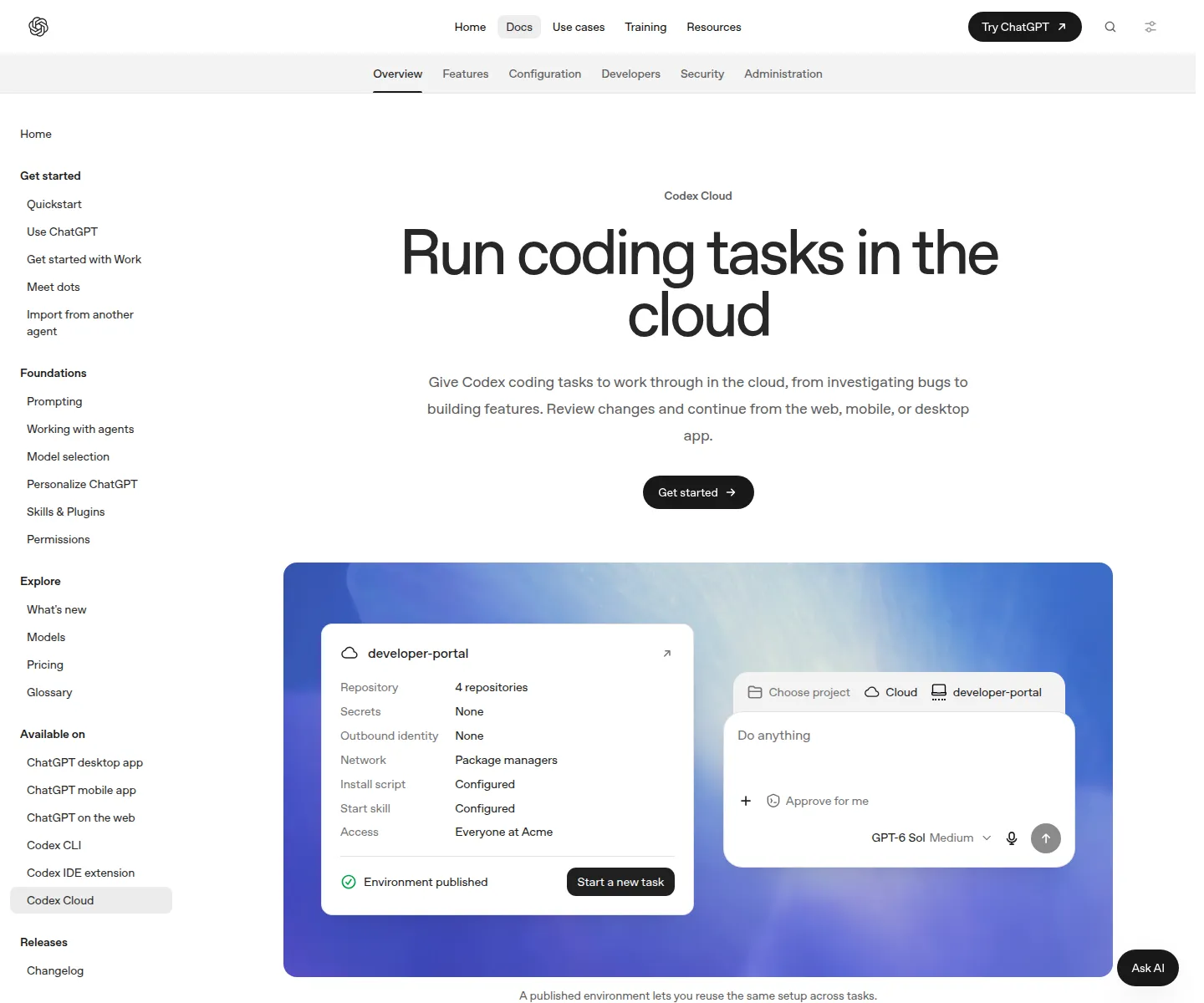
Official Codex page, captured November 23, 2026.


